

Jun 21, 2026 - 59 visit
Real Life Incident: Fuel Soaked Clothes Catch Fire, Engineer Loses Life
Maritime Safety Insight: Fatal Engine Room Fire Following Fuel Leak Repair Attempt
Case Type: Engine Room Fire | Vessel Type: Dredger | Incident Category: Hot Work & Fuel Ignition
A serious engine room incident occurred onboard a dredger during routine operations at a dredging site, resulting in the fatal injury of the Engineer of the Watch (EOW). The event highlights critical safety failures in fuel leak management, communication protocols, and hot work controls.
Incident Overview
During watchkeeping duties, the EOW detected the smell of diesel fuel and subsequently identified a minor leak in the low‑pressure diesel supply line feeding the main engine. Evidence indicates that the engineer attempted a temporary repair while the main engine remained operational and without notifying the bridge team or the Chief Engineer.
During the attempted repair, the engineer’s overalls became contaminated with diesel fuel. Shortly afterward, he used a portable angle grinder in the vicinity of the leak. Sparks generated by the grinder likely ignited atomized fuel vapors as well as his fuel‑soaked clothing.
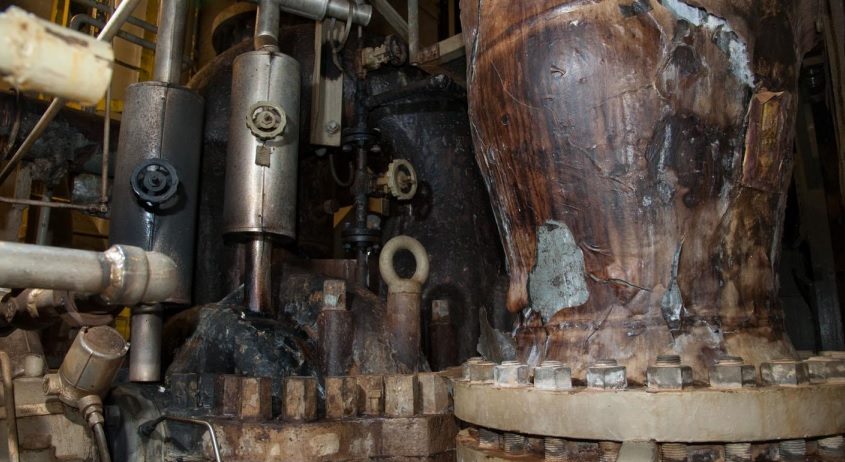
The ignition resulted in personal clothing catching fire and a subsequent engine room fire. Although the fixed CO₂ fire‑extinguishing system was successfully activated and the fire was suppressed, the engineer sustained severe burn injuries and later succumbed to them.
Preliminary Contributing Factors
- Attempted maintenance while machinery remained in operation
- Absence of formal risk assessment prior to repair
- Failure to communicate with bridge and senior engineering staff
- Use of ignition‑producing equipment near a fuel leak
- Inadequate control of contaminated PPE
Technical Risk Analysis
Diesel fuel, although less volatile than lighter distillates, can form flammable vapor‑air mixtures when atomized under pressure. The combination of fuel mist, confined engine room conditions, and ignition sources such as grinding sparks creates a high‑risk environment. Proper isolation, depressurization, and ventilation procedures are critical before initiating any repair work.
Key Safety Lessons
1. Never conduct repair work on fuel systems while machinery is running unless explicitly authorized and risk‑assessed.
2. All fuel leaks must be treated as high‑risk fire hazards.
3. Hot work procedures and permit‑to‑work systems must be strictly enforced.
4. Contaminated clothing should be removed immediately to eliminate ignition risk.
5. Clear communication and chain‑of‑command reporting are essential in emergency scenarios.
Industry Perspective
This incident reinforces the importance of robust Safety Management Systems (SMS), hazard identification protocols, and strict adherence to ISM Code requirements. Effective crew training and procedural discipline remain critical in mitigating engine room fire risks — one of the most severe operational threats in maritime environments.
Raika Offshore provides technical advisory, onboard inspections, and safety risk assessments to support shipowners and operators in strengthening operational safety standards and preventing high‑consequence incidents.